Skip to content
HAv5.0

The Seed Protocol

Designer & Developer2025 to nowLive

A theological content platform with AI-powered search, a Paleo-Hebrew glossary system, and editorial reading experiences. Designed and built end-to-end.

Project details

Stack
  • React
  • Supabase
  • Gemini

What I built

A full-stack platform where theology meets technology, featuring an AI-powered research assistant, a living Paleo-Hebrew glossary, and reading experiences designed with the same care as the content itself.

Editorial reading

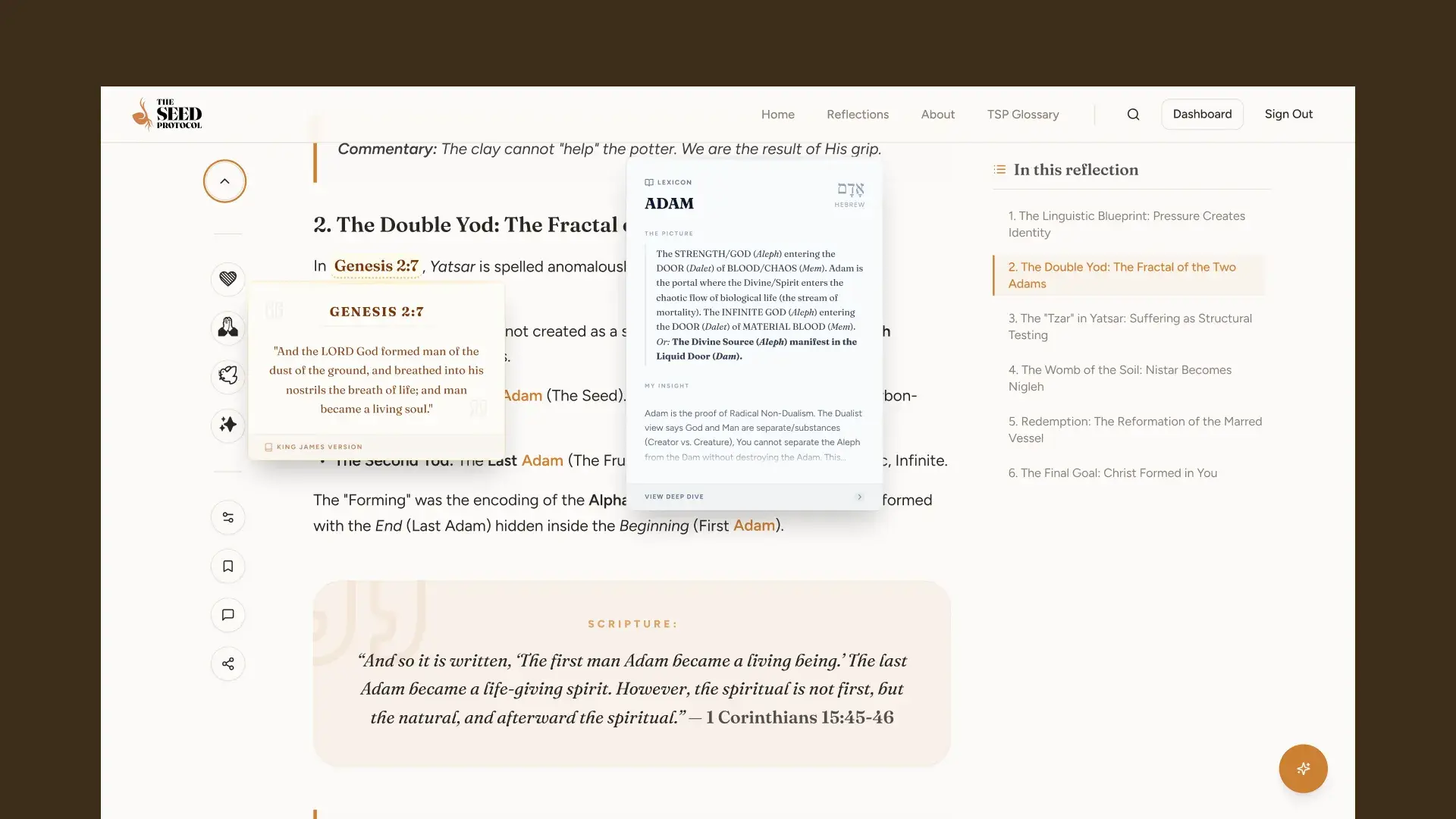
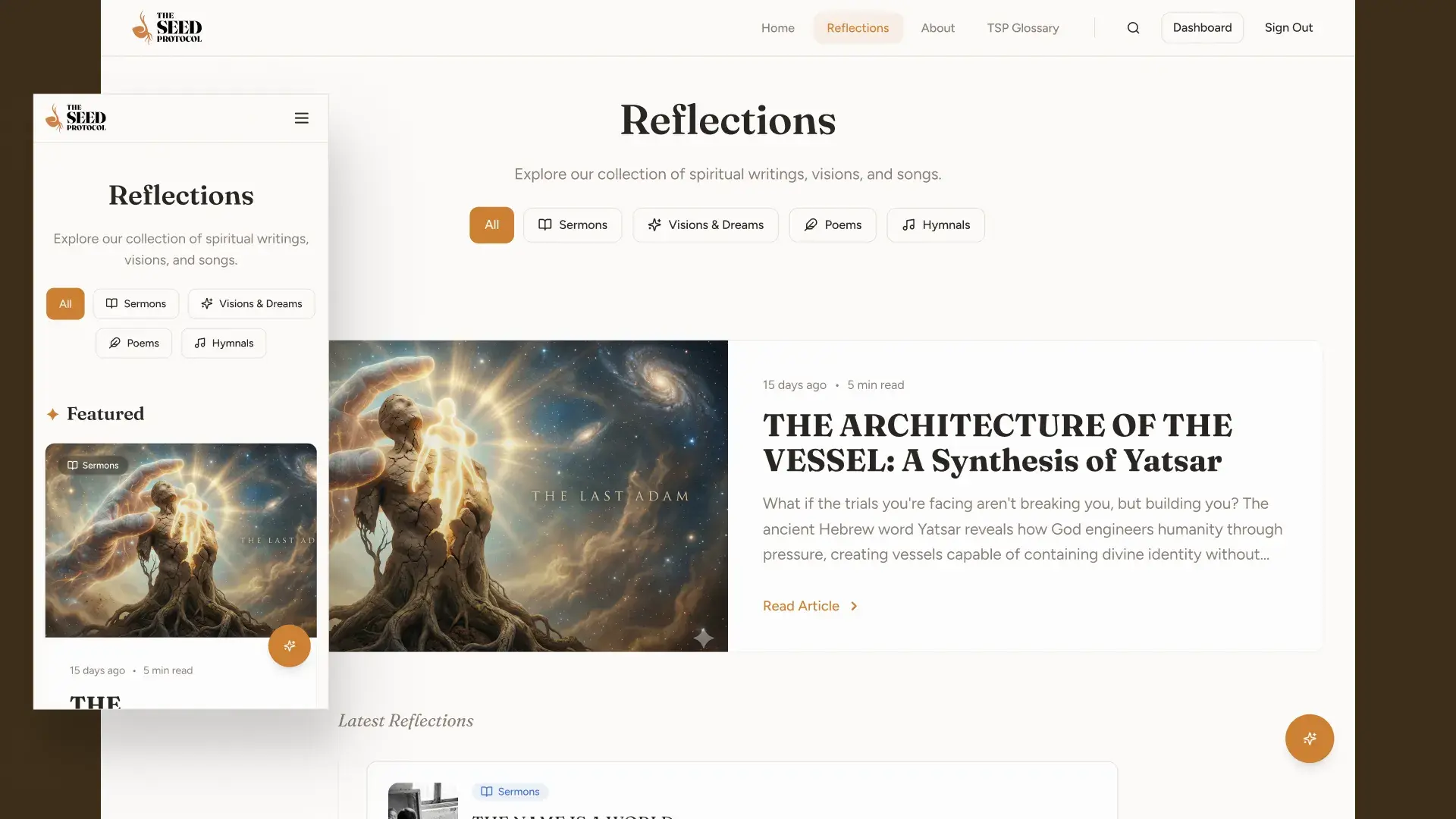
Distinct layouts for sermons, poems, and visions. Custom typography with Crimson Pro for verse, Fraunces for divine voice, and Figtree for commentary. Each content type gets its own visual cadence.

TypographyLayout systemsContent design

AI search & chat

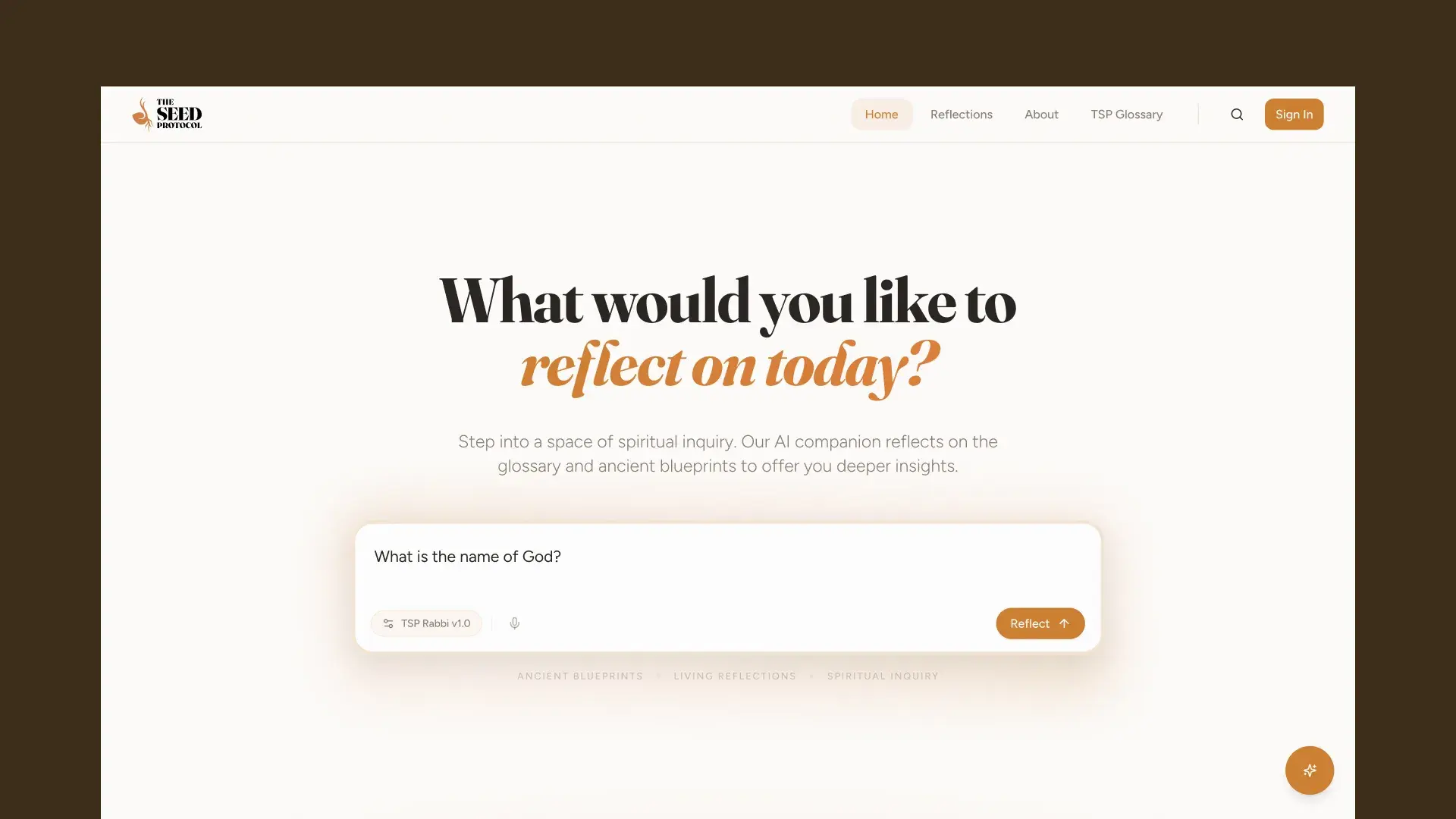
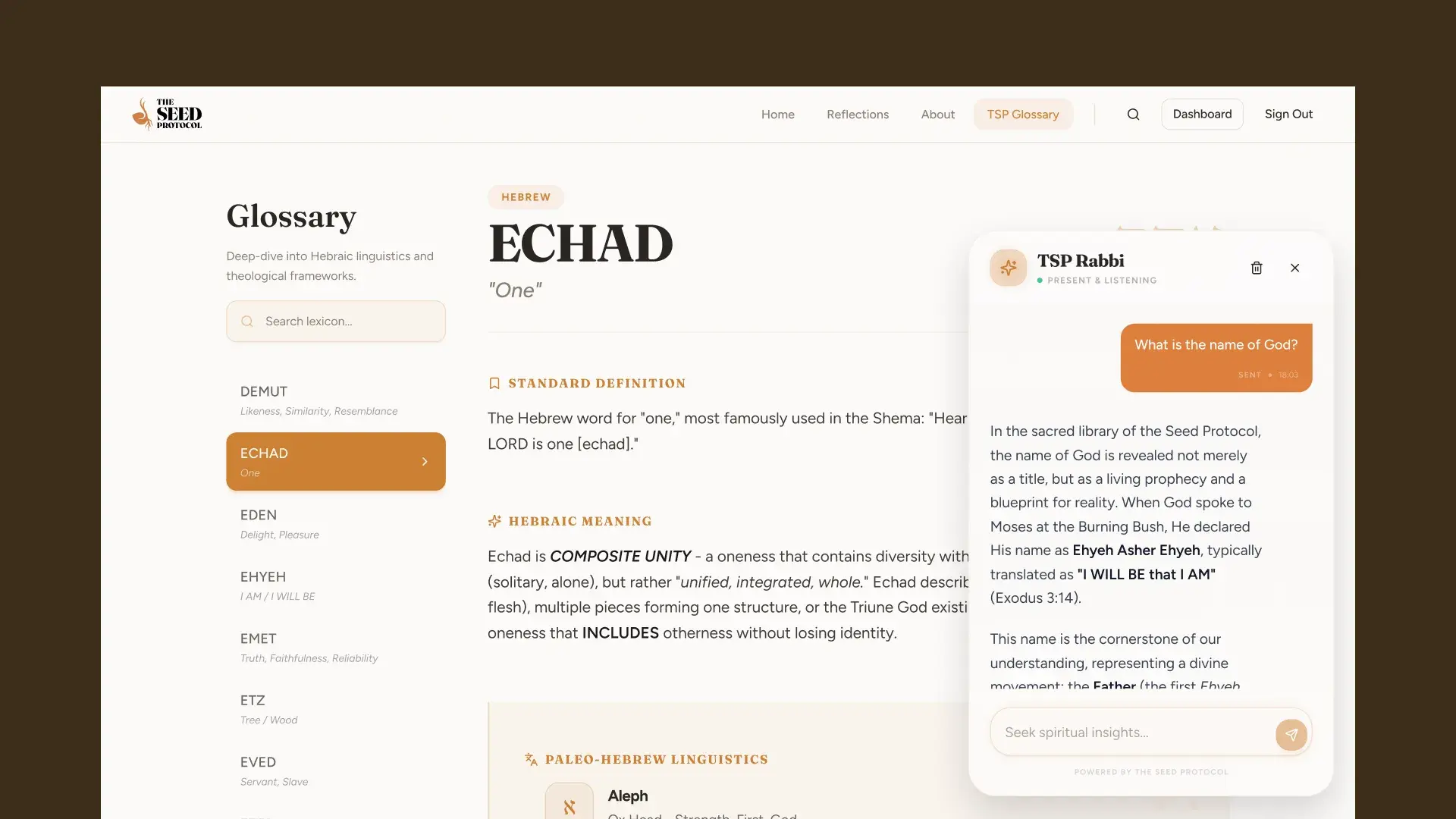
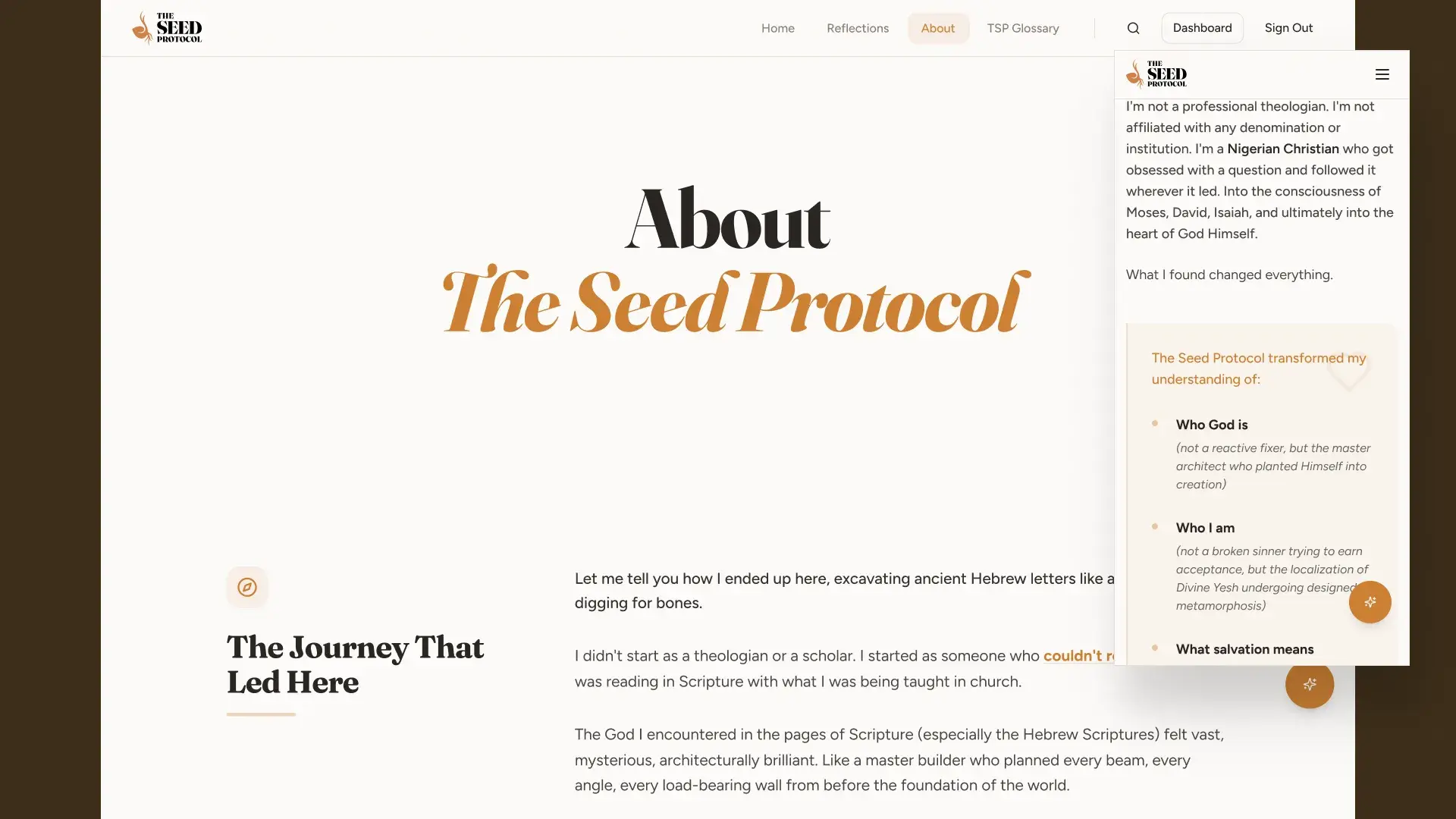
The “TSP Rabbi”: a Gemini-powered assistant that searches the glossary and sermon content to surface contextual theological insights. With voice input via Web Speech API and cross-referenced footnotes.

Gemini APIRAGVoice input

Glossary architecture

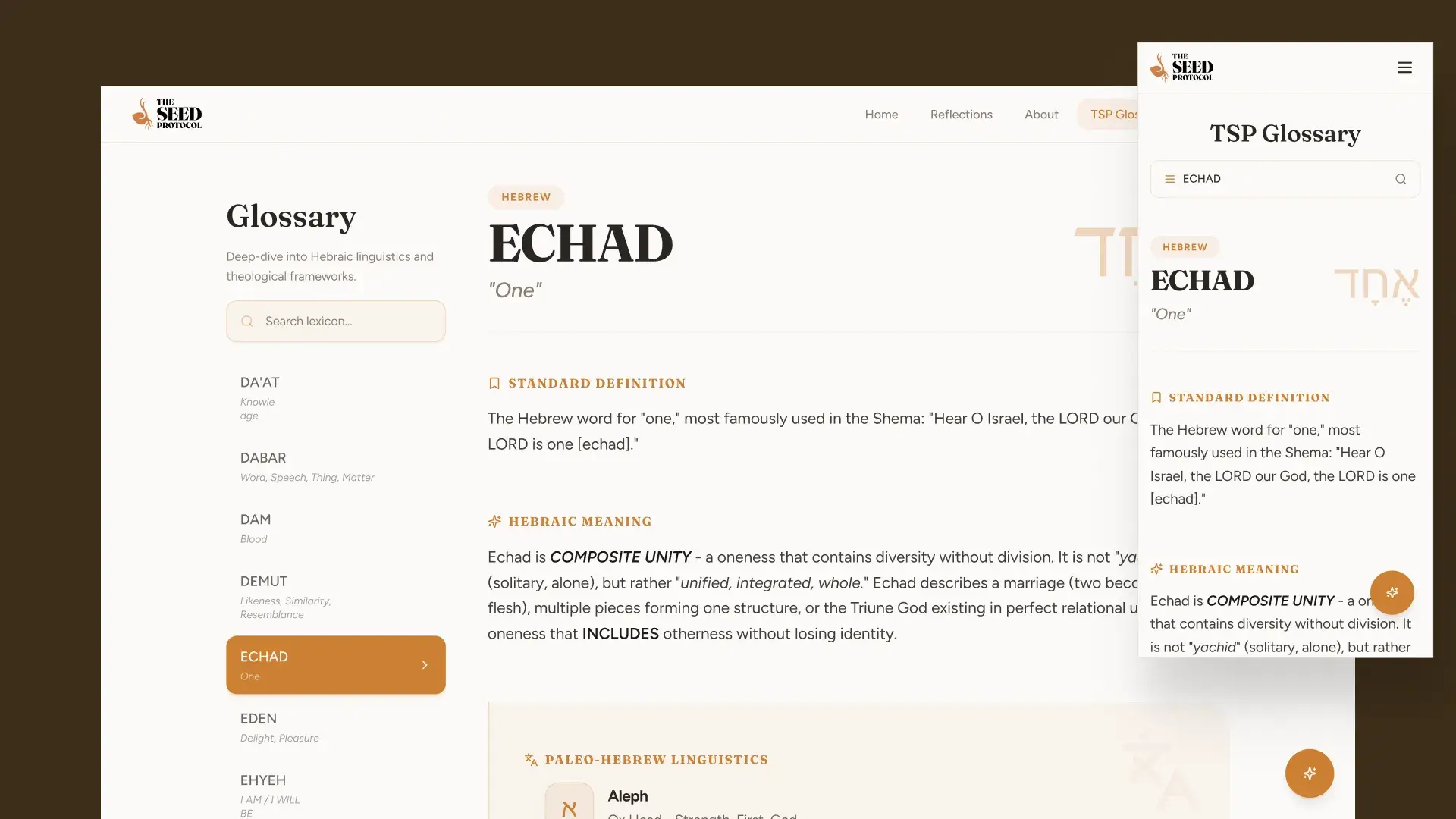
A 12-column grid system with sticky navigation, Paleo-Hebrew letter breakdowns, and theological synthesis sections. Each term is a deep-dive: not just a definition, but a linguistic journey.

Info architectureLayoutData design

Design decisions

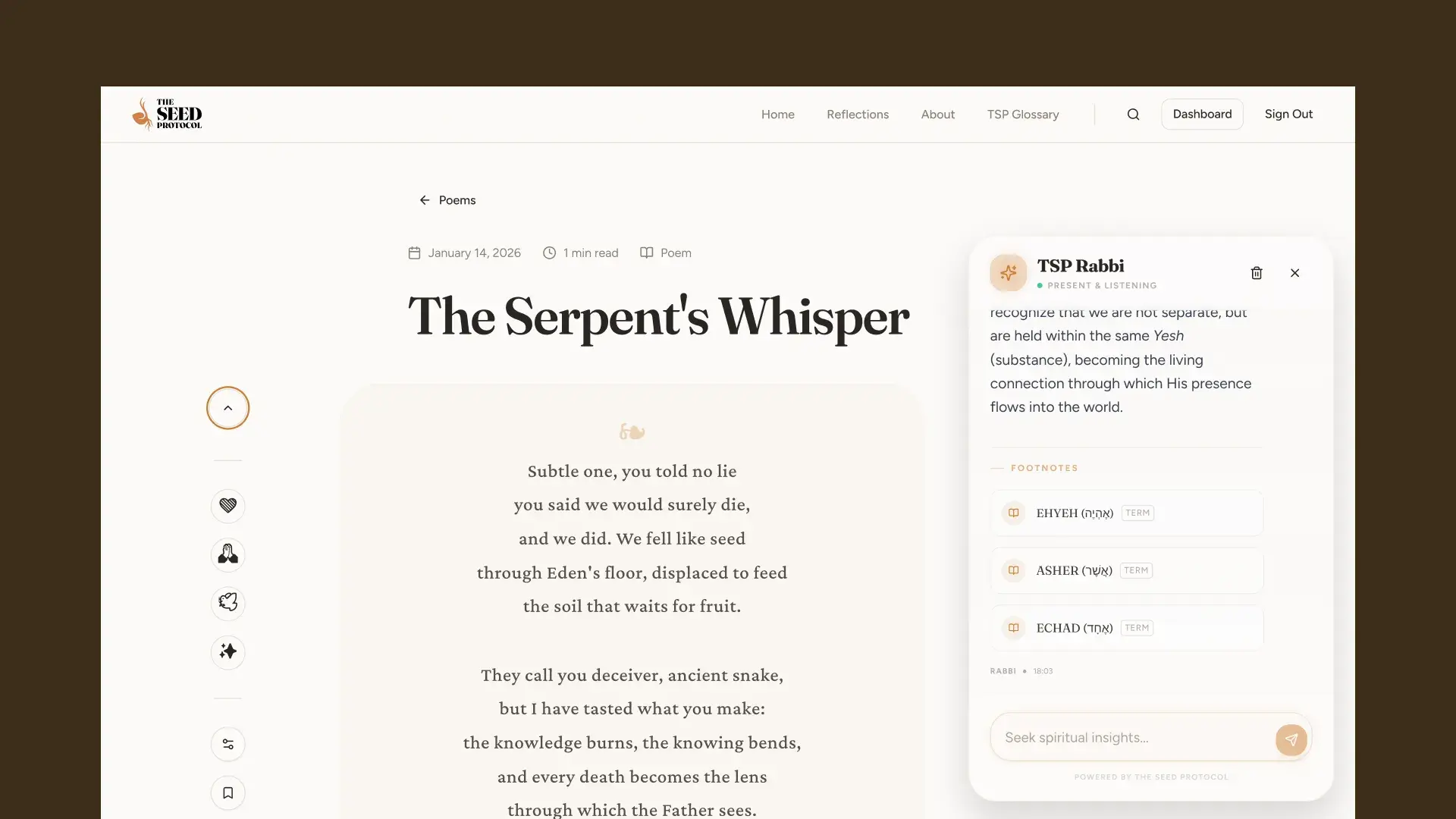
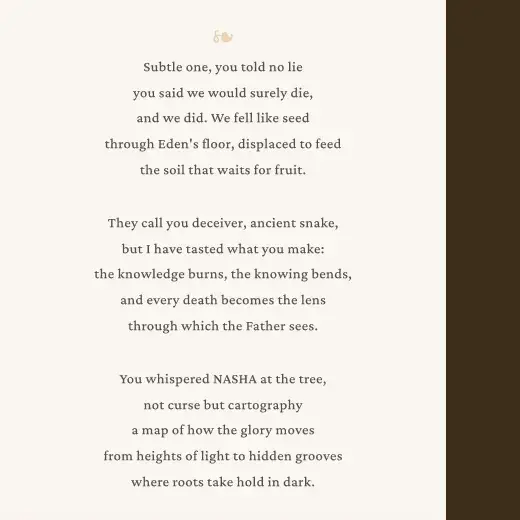
Verses of a poem set in Crimson Pro, centred under a floral dingbat

The typographic dialogue

Different kinds of content demand different visual treatment. Sermons use Figtree (sans-serif) for commentary with Fraunces (serif) cutting through for divine voice. Poems get Crimson Pro with balanced line-breaking. The glossary uses architectural spacing to let linguistic data breathe.

  • Three distinct type systems under one visual language
  • text-balance for natural verse rhythm
  • Gradient text with padding to prevent italic ascender clipping
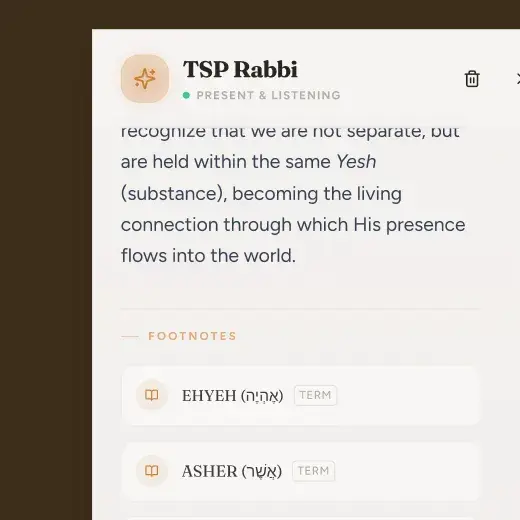
The TSP Rabbi chat with an answer followed by footnotes linking to the glossary terms Ehyeh and Asher

Intelligence, not just search

The TSP Rabbi isn’t a generic chatbot wrapper. It performs retrieval-augmented generation across the glossary and sermon content, returning answers with cross-referenced footnotes that link directly back to source terms. Users can ask by voice, bridging spoken inquiry and written wisdom.

  • RAG over Supabase-stored glossary + sermon content
  • Contextual footnotes with deep links to glossary entries
  • Web Speech API for voice-first theological inquiry
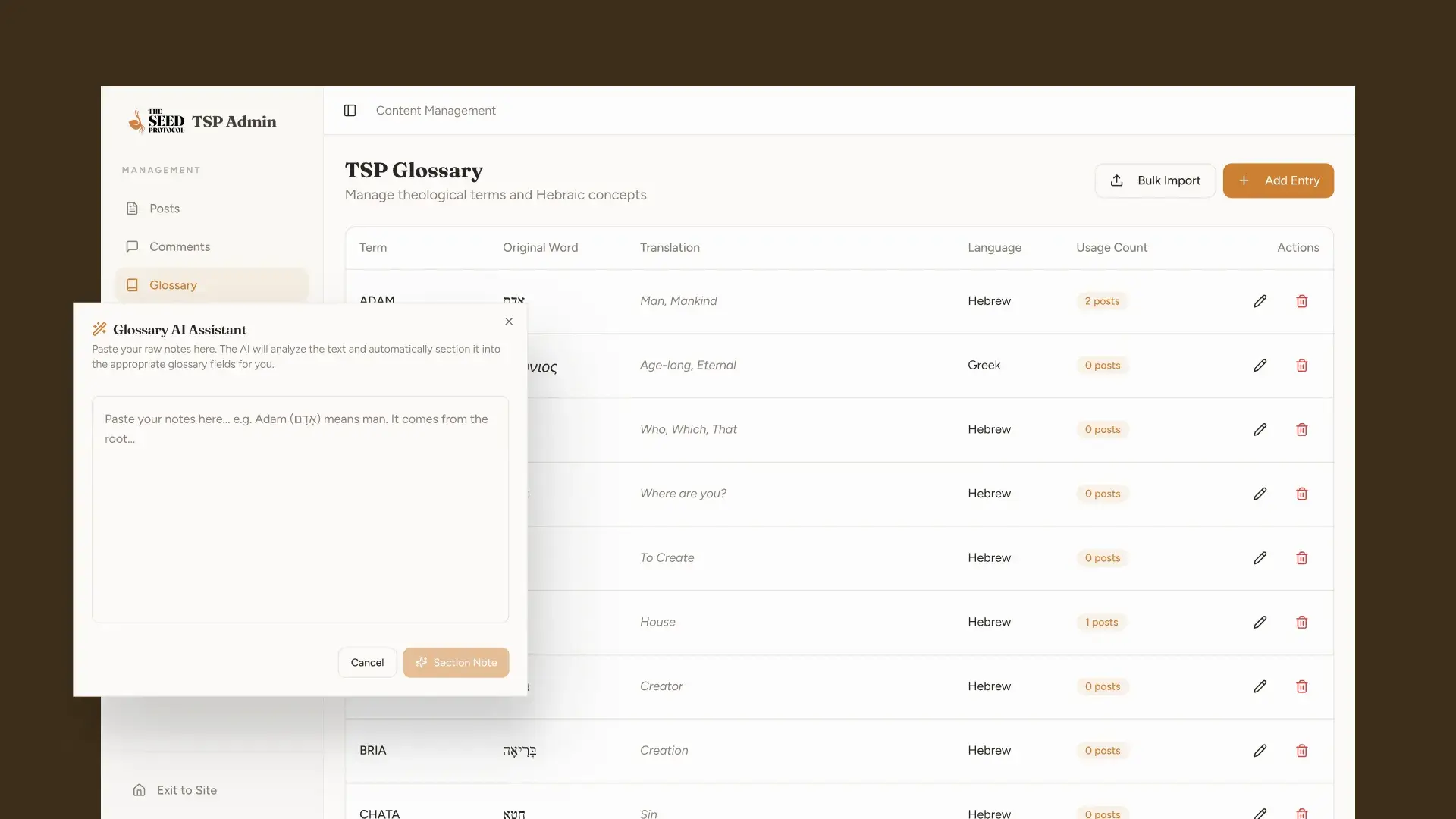
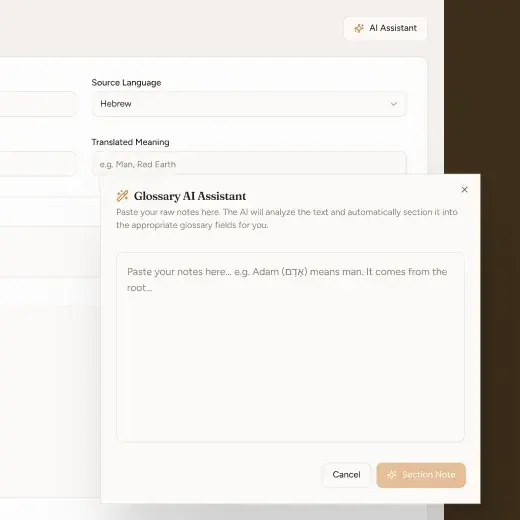
The Glossary AI Assistant open over the glossary entry form, ready to section pasted notes into fields

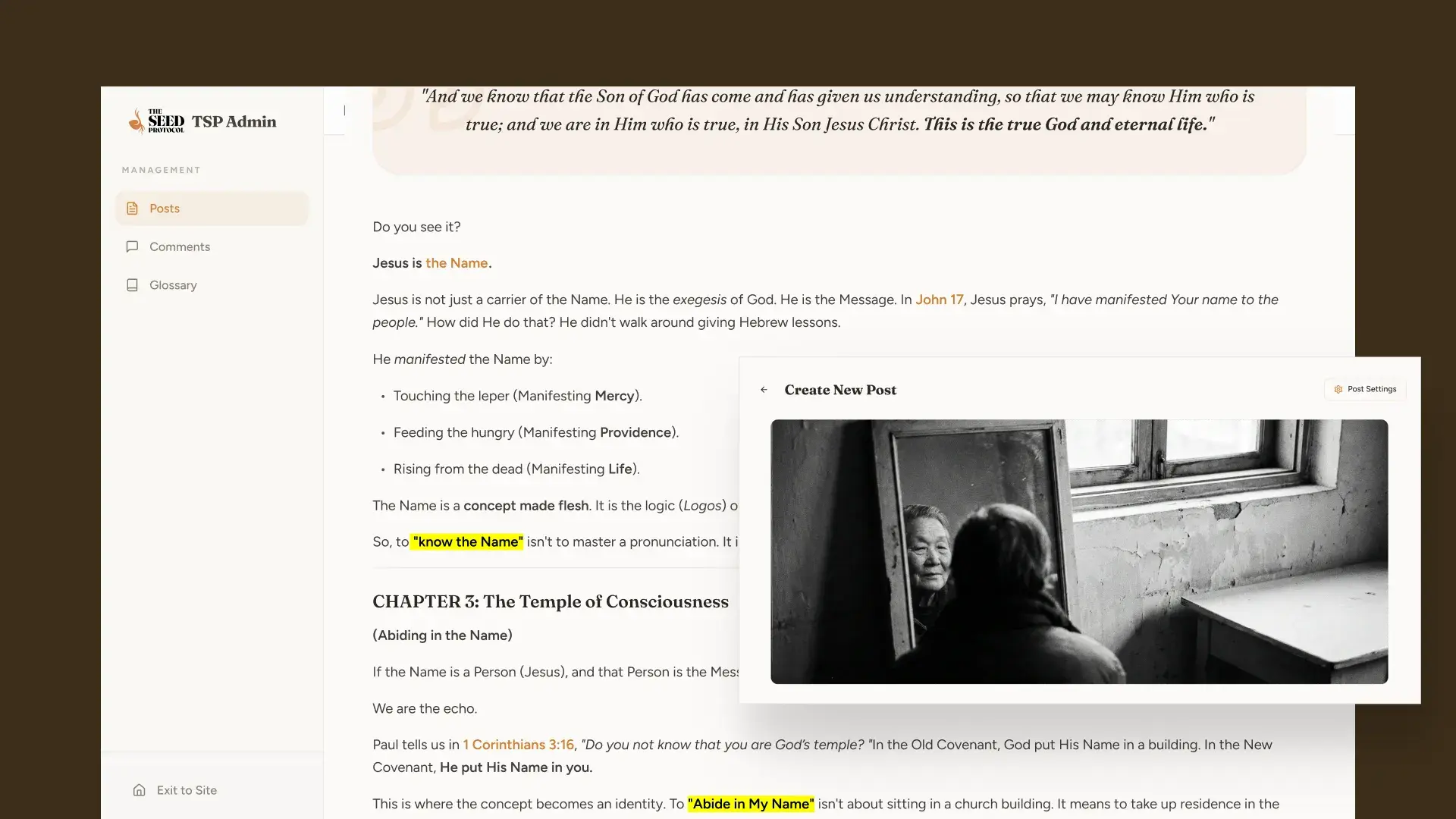
The admin as steward

The CMS isn’t an afterthought. The Gemini-powered note parser transforms raw theological study notes into structured glossary entries, automatically separating Hebrew roots, paleo-linguistics, and theological insights. The Tiptap editor renders headings and blockquotes in real-time with frontend fidelity.

  • Few-shot AI parsing of unstructured notes into schema
  • WYSIWYG preview with production sanitisation logic
  • Bulk import for rapid glossary population

Tech stack

Built with

Frontend
React · Vite · Tailwind · Tiptap
Backend
Supabase · PostgreSQL · Auth · Storage
AI / intelligence
Gemini 2.0 · Web Speech API · RAG
Design
Figma · Design systems · Typography

The journey

Building in public

This project is documented as a living development log. Each “arc” captures a sprint of design decisions, architectural shifts, and technical refinements. It’s the commit history, but as narrative.

  1. The Polish & Portal

    Mobile ergonomics, glassmorphism, editorial TOC

  2. Architecture of Meaning

    Glossary grid, sticky columns, linguistic ledger

  3. The Art of Subtraction

    Card dissolution, typographic breathing, signature redesign

  4. Intelligence & Interface

    Gemini AI integration, preview system, editor clarity

  5. The Genesis of the Seed

    Repository setup, identity shift, documentation

  6. The Poetic Refinement

    Poem typography, atmosphere depth, discovery sidebar

  7. The Interface of Inquiry

    AI search console, voice input, dynamic text area